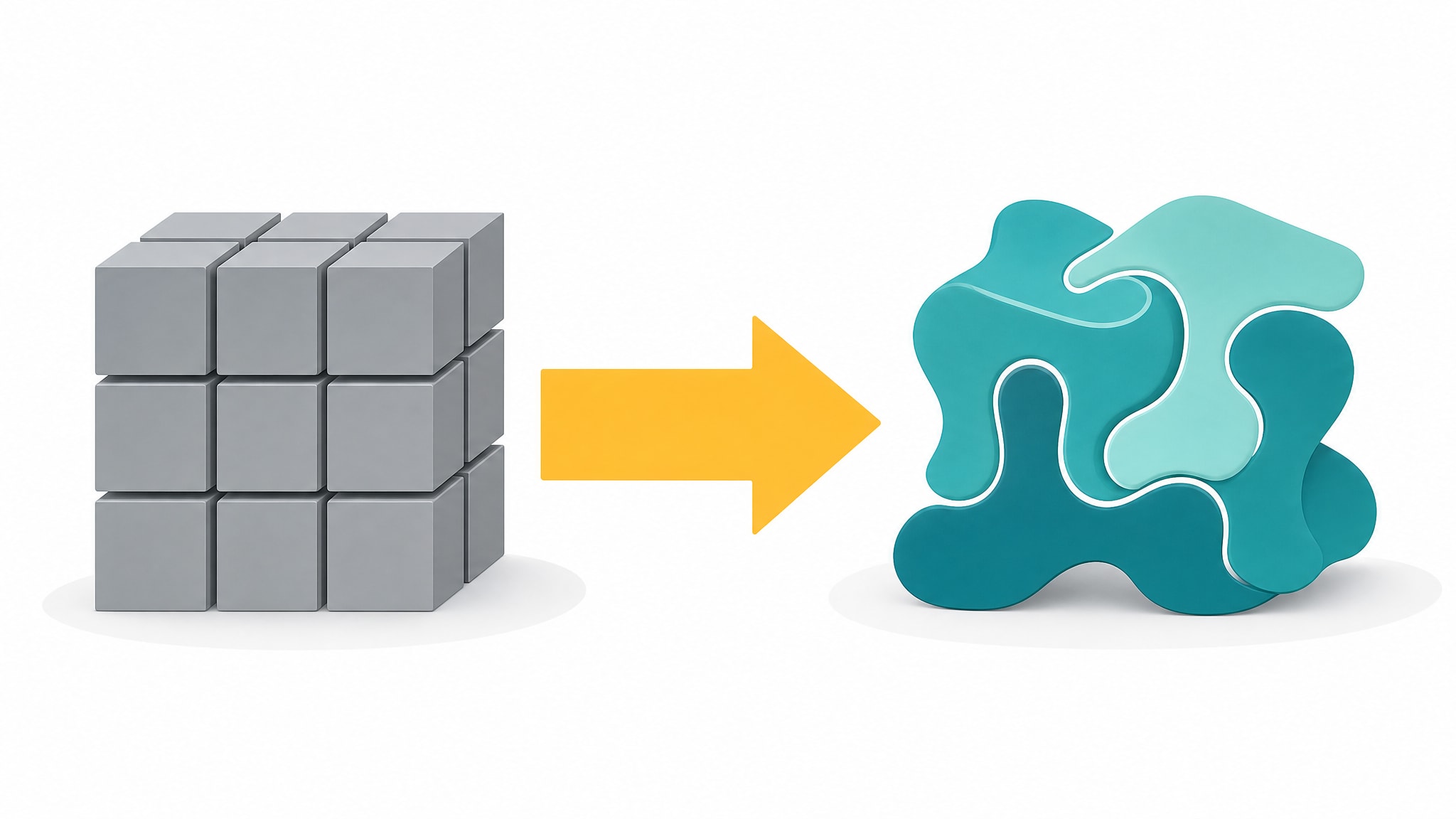
Choosing between custom software and off-the-shelf software isn't really a technical decision. It's an operational one: should your tools dictate how you work, or support it? Small property management firms and construction companies often hit a breaking point where generic platforms create more friction than they solve. Teams end up maintaining parallel spreadsheets and email threads just to get the job done.
The right system brings customers, projects, properties, jobs, tasks, documents, payments and people into one place, without forcing you to restructure how you operate. Understanding the practical differences between the two approaches helps you decide which one actually fits your next stage of growth.
Understanding Custom Software vs Off-the-Shelf Software
Each approach solves a different problem. Off-the-shelf products are built for common needs across thousands of users. Custom internal systems are built around the specific way your business handles records, statuses and workflows.
What Defines Off-the-Shelf Solutions
Generic software packages aim to serve the broadest possible market with standardized features. They give you immediate access to common functions like contact management, invoicing or task tracking, usually at a low entry price. You configure settings and pick modules, but the underlying structure stays fixed no matter what your business actually looks like.
This works fine when your processes line up with industry-standard assumptions. Property managers tracking simple rent rolls, or contractors running small crews, often find these tools good enough in the early stages.
The trouble starts when your workflow doesn't match the vendor's template. You can't add fields that matter for your specific contracts. You can't change status transitions to match your approval chain, or link records the way the platform never anticipated. Your team starts working around the software instead of within it.
What Makes Software Truly Custom
Custom software starts with your existing operations and builds a private, web-based system around them. Instead of adapting your business to predefined categories, the system reflects how you actually manage tenants, track job site progress or coordinate subcontractors. Every field, status and relationship exists because your business needs it there.
This closes the gap between what the software offers and what your operations demand. 1000FLAT builds custom internal business systems for a fixed $1,000 price, built specifically to replace fragmented spreadsheets and generic SaaS for small businesses. The result feels like a natural extension of your work, not a constraint on it.
You keep complete control over how information moves through your organization. Changes to your process don't mean waiting on a vendor's roadmap or paying for a feature tier you didn't ask for.
True Cost of Ownership Beyond the Price Tag
The sticker price only tells part of the story, for either option. What matters is total spend over the life of the system.
Calculating Long-Term Expenses for Generic Tools
Monthly subscription fees add up fast as you add users, storage and premium features. Off-the-shelf tools often look affordable at first, but you have to calculate the total cost of ownership over a 3–5 year period to account for licensing, upgrades, integrations and support fees. Hidden costs pile up through paid add-ons, API access charges and forced tier upgrades once you cross some arbitrary limit.
Your costs scale directly with headcount and data volume. A team that doubles in size might see its software bill triple, once it unlocks higher-tier plans or buys extra seats. Integration middleware and third-party connectors add recurring line items nobody mentioned in the sales demo.
Training and onboarding costs come back every time the vendor redesigns the interface or kills a feature your team depends on. Those disruptions cost real productivity, even if they never show up on an invoice.
The Fixed-Price Custom Model
Custom development used to mean unpredictable costs and open-ended timelines. Fixed-price models fix that by scoping the system to your current operational needs before any work begins. You know the exact investment upfront, with no surprise change orders and no scope creep.
Because you own the system outright, ongoing costs stay predictable. There are no per-user fees that punish growth, no mandatory upgrade cycles that force unbudgeted spending. Maintenance and hosting costs stay flat whether you add employees, properties or projects or not.
That turns software from a variable operating expense into a capital investment with a known return. Budget planning gets a lot simpler when your core platform doesn't move with vendor pricing changes.
Scalability and Growth Planning
The software you choose today has to work for where your business will be in three years, not just where it stands now. Growth is what exposes the limitations that stay hidden during quiet periods.
Adapting to Business Expansion
If you're projecting significant growth over the next 1–3 years, your software infrastructure needs to plan for that expansion, or you'll outgrow it fast. Generic platforms often hit hard ceilings on record counts, user permissions or automation complexity right when momentum picks up. Migrating mid-growth disrupts operations and forces teams to relearn workflows at exactly the wrong moment.
Custom systems scale with your operational complexity instead of against it. Adding new property types, project categories or contractor tiers is a configuration change, not a platform switch. Your system grows as your business does.
You skip the productivity cliff that hits when outgrown software can no longer keep up. Teams keep using familiar interfaces and established data relationships even as volume climbs tenfold.
Avoiding Platform Migration Pain
Switching operational platforms is expensive, disruptive and risky. Data migration loses context, breaks relationships and leaves behind manual cleanup that eats weeks of staff time. Employees resist new workflows after spending years mastering the old one.
Building with growth in mind from day one avoids that cycle. Your custom system can handle future states without a rebuild. Features you don't need today get added later, without disrupting what already works.
That continuity keeps the institutional knowledge buried in your operational records intact. Historical data stays accessible and useful even as the business changes shape around it.
Operational Fit for Property Management and Construction
These industries run on interconnected records and statuses that generic tools struggle to represent. Specialized workflows need specialized structures.
Managing Properties, Tenants, and Maintenance
Property management companies often get stuck with generic tools that can't natively link tenants, rent payments, maintenance requests and contractor assignments in one view. Staff bounce between accounting software, maintenance ticketing and messaging apps just to piece together a basic operational picture. Context gets lost in the gaps between tools.
A custom system treats all of that as related records in one database. A tenant record links directly to their lease terms, payment history, open maintenance tickets and assigned contractors. Property managers see the full picture without cross-referencing five different apps.
Maintenance workflows follow your actual escalation process, not a vendor's generic ticket lifecycle. Status changes, notifications and assignment rules reflect how your team really resolves issues.
Tracking Projects, Subcontractors, and Documents
Construction operations mean coordinating moving parts across job sites with conditions that change daily. Generic project management tools assume tasks happen one after another, not the parallel, interdependent work that actually defines a construction project. Subcontractor coordination, document versioning and progress tracking end up scattered across separate tools.
Custom business operations software ties these pieces together. Project records connect to subcontractor agreements, daily logs, photo documentation and payment applications. Field teams find what they need without digging through folder structures or old email chains.
Document control follows your submission and approval process automatically. Version history, review status and distribution lists stay in sync with project progress instead of drifting out of date.
Integration and Workflow Consolidation
Fragmented tools create overhead you don't see until it piles up. Every disconnect between systems means duplicated effort, delayed information and a higher chance of error.
Replacing Spreadsheets and Disconnected Apps
Most growing businesses pick up tools reactively, not strategically. A spreadsheet tracks what the CRM misses. WhatsApp handles what email can't. Shared folders store whatever neither system captures. Finding reliable software to replace spreadsheets means pulling these fragments into one coherent workflow.
Integration promises often fall apart in practice, because generic tools expose limited APIs or charge premium rates for data access. Point-to-point connections break the moment either vendor updates its platform, and the maintenance burden lands on your IT resources. Sync delays mean teams never fully trust that the numbers in front of them are current.
Custom systems skip integration points by design. All your operational data lives in one structured environment, with consistent relationships and real-time updates. No middleware to maintain, no sync schedule to babysit, no translation layer to corrupt the data.
Centralizing Business Data
Scattered information slows decisions down. Managers spend hours pulling reports from different sources just to see where a project, property or team actually stands. By the time the picture is clear, conditions have already shifted.
Centralized data gives you that visibility immediately. Dashboards reflect live status across every record, with no manual aggregation. You see which properties have overdue maintenance, which projects are nearing budget, and which contractors still owe you compliance documents.
That consolidation also tightens security and access control. Sensitive information sits in one governed environment instead of spreading across personal devices, cloud storage and third-party apps. Audit trails show who accessed what and when, which supports compliance without extra tooling.
Making the Right Choice for Your Stage
Not every business needs custom software, and knowing that saves time and money. Companies with genuinely standard processes and stable headcounts may do fine on generic tools indefinitely. Custom development doesn't help a business whose workflows change monthly or whose operational model isn't settled yet.
The decision comes down to three things: how unique your processes are, how much cost predictability you need, and where your growth is headed. If your operations involve record relationships that generic tools just can't represent, customization solves a real problem. If variable licensing costs mess with your financial planning, or discourage you from hiring, fixed-price ownership removes that constraint. If you're expecting real growth within three years, building for it now avoids a costly migration later.
Software should adapt to your business, not the other way around. When generic tools create more workarounds than efficiency, looking into custom software for small business is a practical next step.
When you're ready to see whether a fixed-price custom system fits your operations, you can start your project with a clear picture of scope and investment.
Frequently Asked Questions
What is custom software?
Custom software is a private system built specifically around how your business already operates, rather than forcing you to adapt to predefined templates. It centralizes your unique records, workflows and relationships, like properties, tenants, projects or subcontractors, into one coherent platform. Unlike generic SaaS, every feature exists because your operations require it.
How much does custom software cost?
Traditional custom development varies widely based on scope, but fixed-price models now offer predictable alternatives. 1000FLAT builds custom internal business systems for a flat $1,000 fee with no per-user licensing or hidden charges. This contrasts with off-the-shelf software where costs compound through subscriptions, add-ons and tier upgrades over time.
What are examples of off-the-shelf software?
Common off-the-shelf tools include generic CRMs like HubSpot, project management platforms like Asana or Trello, and accounting software like QuickBooks. These serve broad markets with standardized features that work well for common workflows. They become limiting when your business requires specialized record relationships or status transitions they cannot accommodate.
When does a unique workflow justify custom software?
Custom software makes sense when your team maintains parallel spreadsheets, email threads or disconnected apps to compensate for generic tool limitations. If your property management company cannot link tenants to maintenance requests natively, or your construction firm tracks subcontractors separately from project documents, those gaps indicate workflow specificity. The justification is operational friction, not technical ambition.